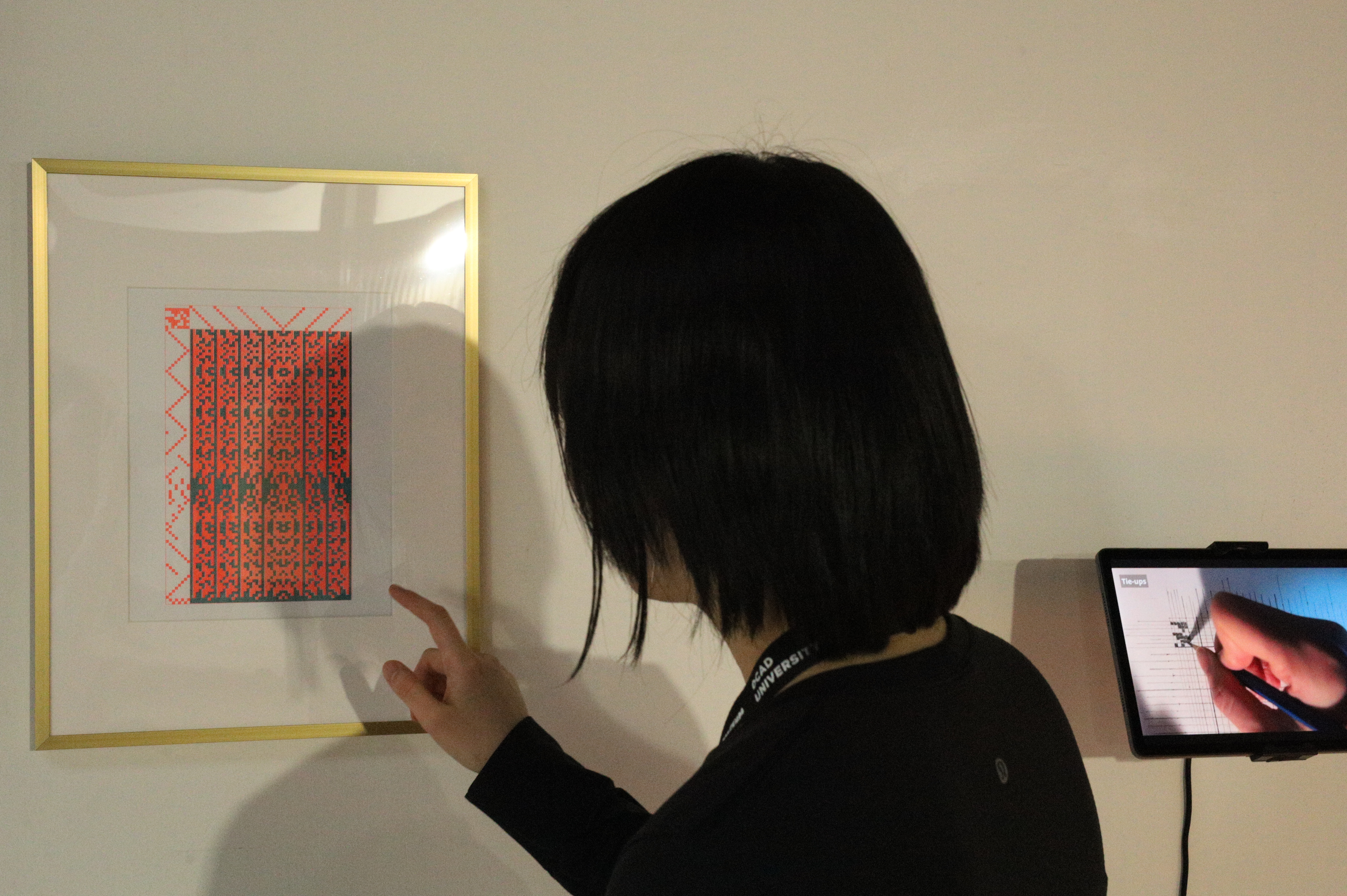
 (Image courtesy of Yuhan Xia)
I argue weaving fulfills most, if not all, of the identifiable criteria articulated in Wikipedia’s definition of digital media.1
Context
What images come to mind when one thinks of weavers? Are they imagined as women, seated at a loom, passing the shuttle, stepping on treadles, or beating the weft into place? Do these scenes unfold within domestic interiors or rural village settings? Are these figures implicitly racialized as people of color?
Such recurring images reflect a dominant visual and cultural discourse. It is a socially constructed truth that hand-weaving is associated with women rather than men, situated in domestic or small-scale contexts rather than industrial or technical environments, and understood as a practice grounded in embodied manual skill rather than algorithmic or computational thinking.
However, my own experience of learning to weave challenged these assumptions, particularly the latter two. The technical complexity of weaving—its reliance on structured sequences, pattern logic, and procedural operations—suggests affinities with computational thinking that are often overlooked.
There are striking analogies between the loom and the computer. The very term “threading” in computer science echoes textile processes. These resonances prompted me to imagine an alternative narrative: one in which the loom is not excluded from histories of technological advancement, but instead recognized as site for the development of information structures, programming logics, and symbolic transmission.
Yet, rather than merging these two domains, my exploration revealed a fragmented relationship—a broken circuit of communication, using Stuart Hall’s term—between weaving and computation. This disjunction suggests that before constructing a compelling bridging narrative, it is necessary to establish a shared conceptual ground.
To this end, I began investigating historical moments in which weaving and computation intersected, even in their early or premodern forms. These encounters, though often overlooked, demonstrate how both practices have long functioned as systems for encoding and transmitting meaning. The following sections elaborate on several such points of convergence.
Sending a Message
How do we send a message to someone?
This is a fundamental question that all living beings must address. For humans, languages are developed and those that can transmit messages more efficiently remained, such as Phoenician alphabet. Later, the development of communication technology inherited the same goal: finding faster, more efficient ways to send messages, or information, across a greater space.
In the process, we learnt to tap into the potential of the binary, using two states (yes or no, or 1 or 0) which allowed us to standardize and compact any information we can think of, that can be received free from ambiguity on the other end. Examples include polibius square in antiquity, bilateral cipher proposed by Francis Bacon, different kinds of electrical telegraphs, morse code, and the computer.
Another Way of Sending a Message
Outside of the “war zone”, women also embedded messages in their woven artifacts. But this message does not seek to expand, go fast, or be efficient.
In Japan, reading the historical Manyousyu, we see that women presented their woven cloth to the loved ones, not only for their functional needs, but also signifying their love and good wish through the pattern. In the isles of Okinawa, woven fabric was also gifted to brothers from sisters to wish for their safe travels. The woven artifact was believed to protect the male family members, especially because of the time and effort women have put into making it. It also symbolized the trade, and hence a safe travel to reach the other lands; and the smooth water, where the smooth surface of the fabric and yarns were evoked 2.
The message is quietly embedded in the woven, manifested through time and effort. And the message doesn’t change with time, carried by the male families when they were away from home.
Interestingly, a similar cultural practice was observed spontaneously within different cultures, from ancient Greek, where “a woven object was material speech”; and ancient Middle East, where “cloth has been used throughout various locations in the ancient Near East as a means by which one casts a spell3.
A Hidden Common Ground
On the other hand, the power of binary culminated in the invention of the computer, a machine that is flexible to do almost anything, not just sending information. But binary is nothing new. It has always been applied in many aspects of human activities, including weaving.
By weaving, I do not mean the famous jacquard loom or his punch card system. Weaving as a practice has always explored binary and algorithms. Rather, the invention of punch card has robbed that agency from the weavers, and in turn made the binary system visible and understandable to non-weavers to inspire their new machines4.
Two Different Languages
Across Europe, since the industrial revolution and the coming of mechanical looms, hand-weavers who mastered the art of binary programming, were tucked in homes and villages; while the industrialized factories, in turn, hired weavers and non-weavers that were only given one treadle to step on, as the programming is taken care of by punch cards. The environment no longer affords the workers to tinker with the woven material, and a single treadle made the work more physically demanding due to the weight it has to support. They become the silent, obedient, physical labors. Instead, the dominant language and the power was transferred to wealthy men who spread the convention through colonization and cultural influence to the rest of the continents. The same power structure is also carried over across time, to manufacturing and technical industries that we are surrounded by.
The two worlds—the world of industries (manufacturing and tech), and the world of weavers—now became completely separated. We talk two different languages that cannot be comprehended from the other side.
And so when I made a statement like “I drafted ASCIIs as tie-ups”, their conceptual overlap was not readily recognized. The statement required extensive explanation, revealing a lack of shared vocabulary between the two fields. Despite their structural similarities, there is little common ground through which these ideas can be mutually understood. Establishing such a shared framework, therefore, becomes a necessary condition for effectively presenting the kind of work I am proposing.
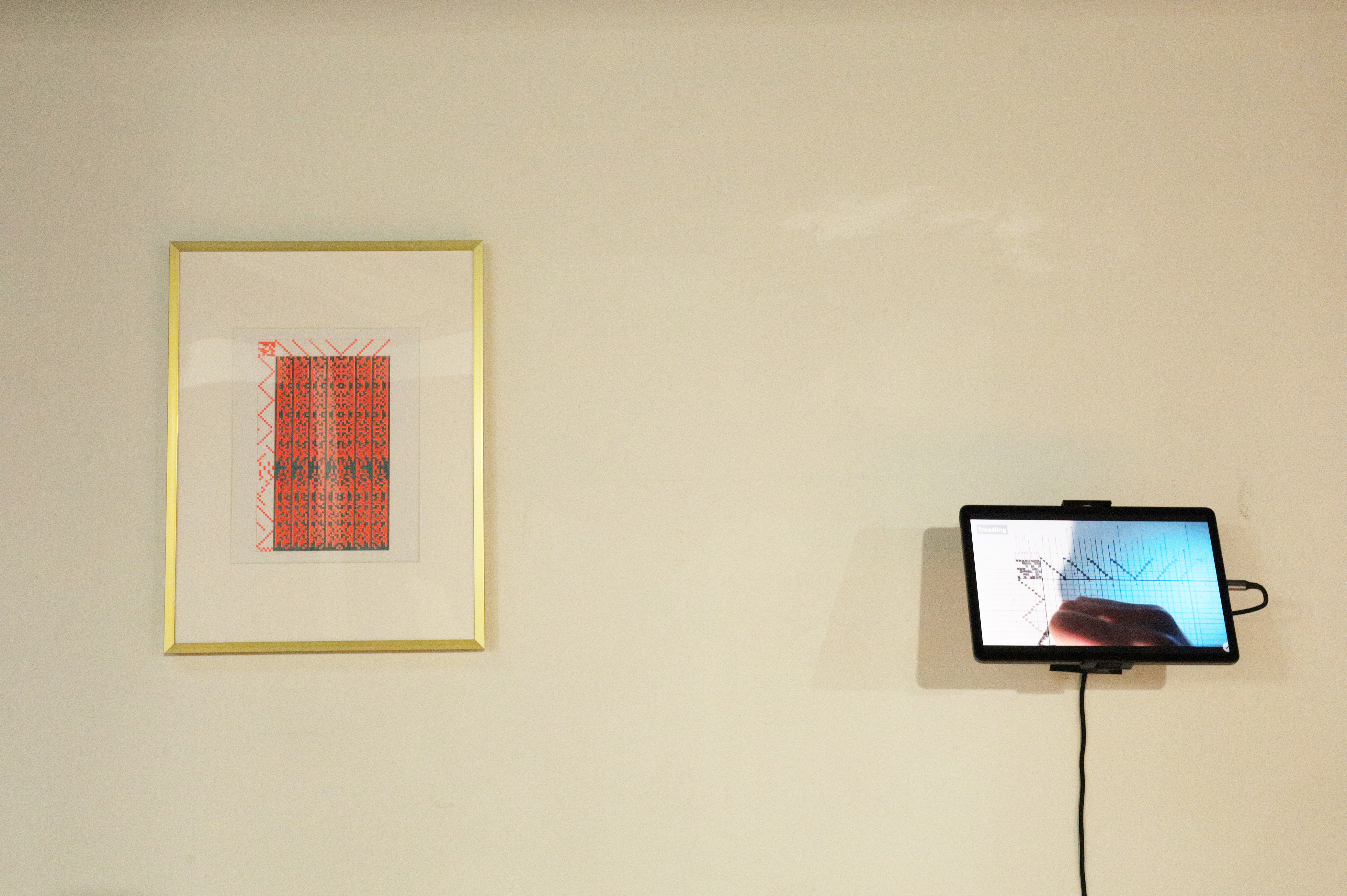
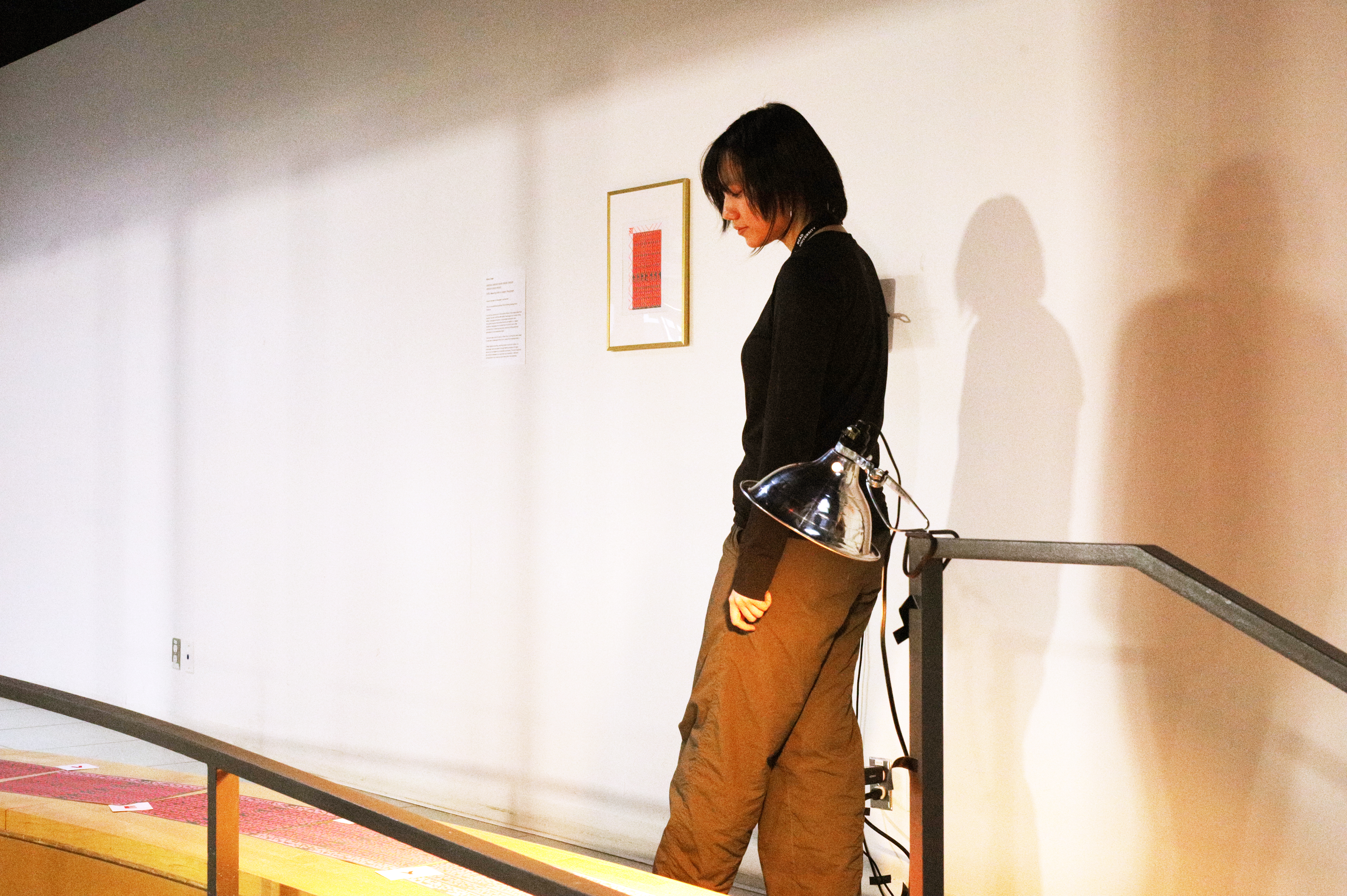 (Image courtesy of Yuhan Xia)
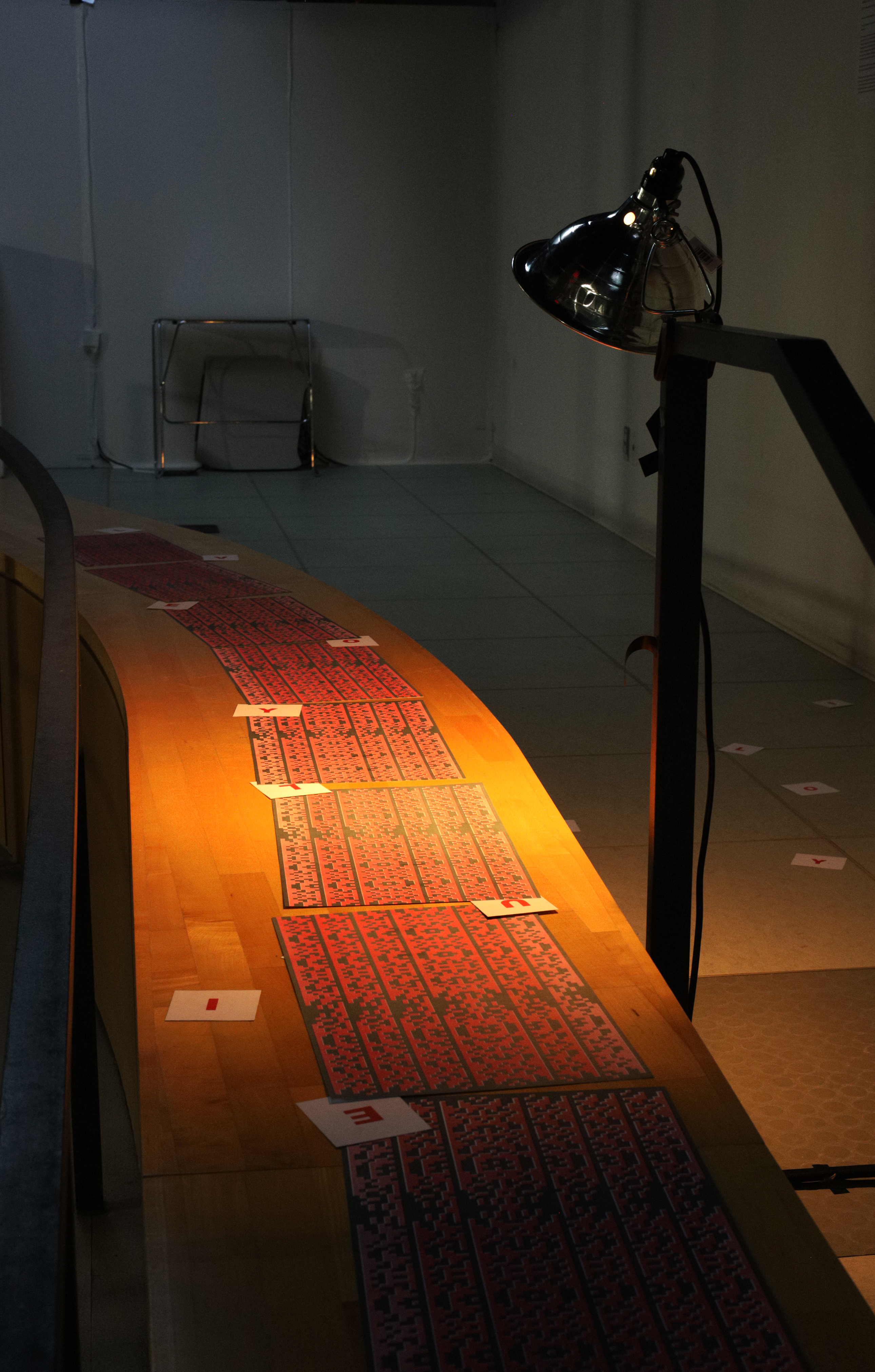
Below is an overview of the keywords used.
ASCII
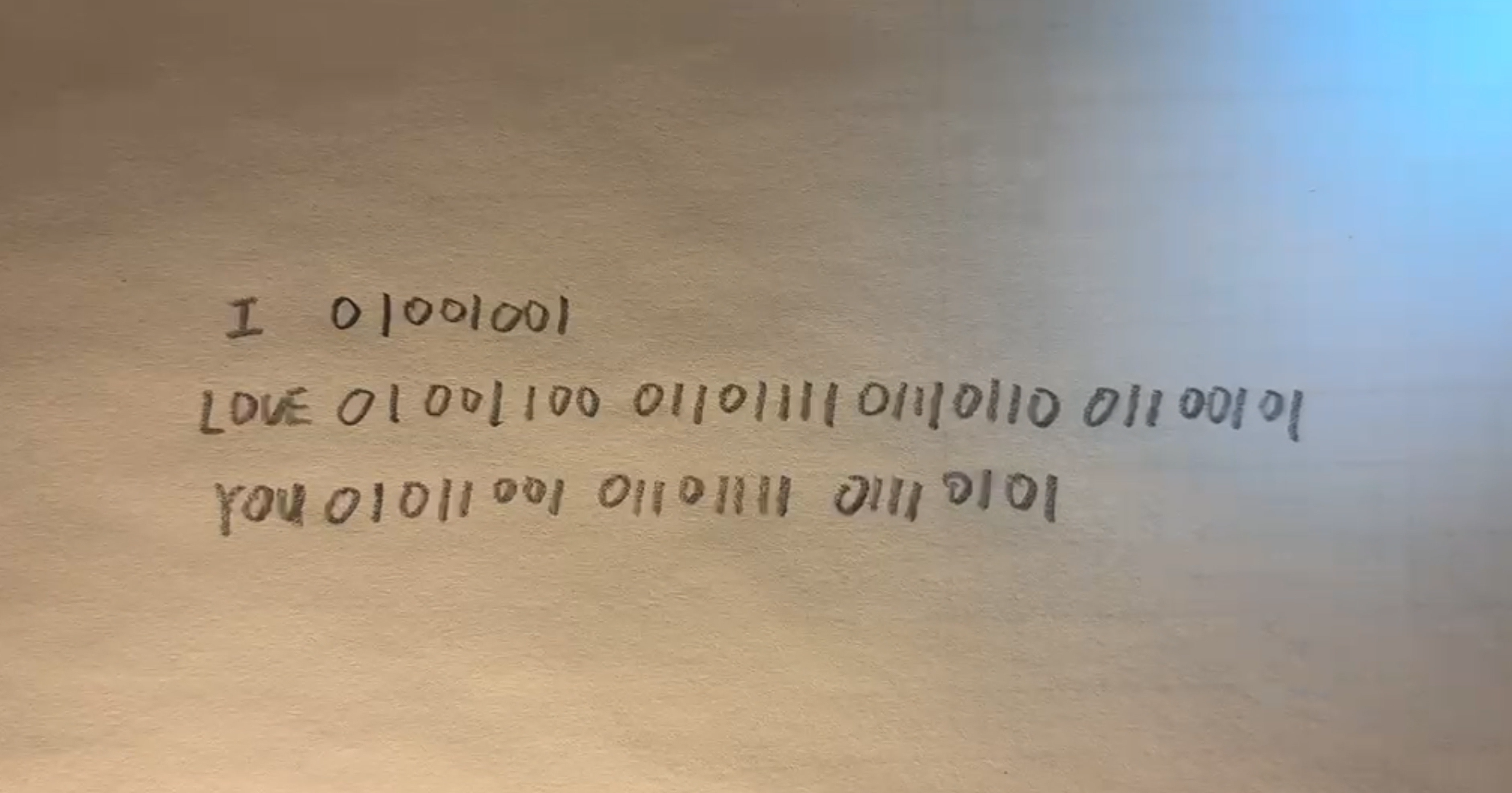
ASCII (American Standard Code for Information Interchange) is a system that computers use to convert letters, numbers, symbols, and other text elements into a language they can understand. When we type something into our computer, they are transformed into 8-bit binary ASCII codes at a lower level, and transformed back into natural language before returning back to a human audience.
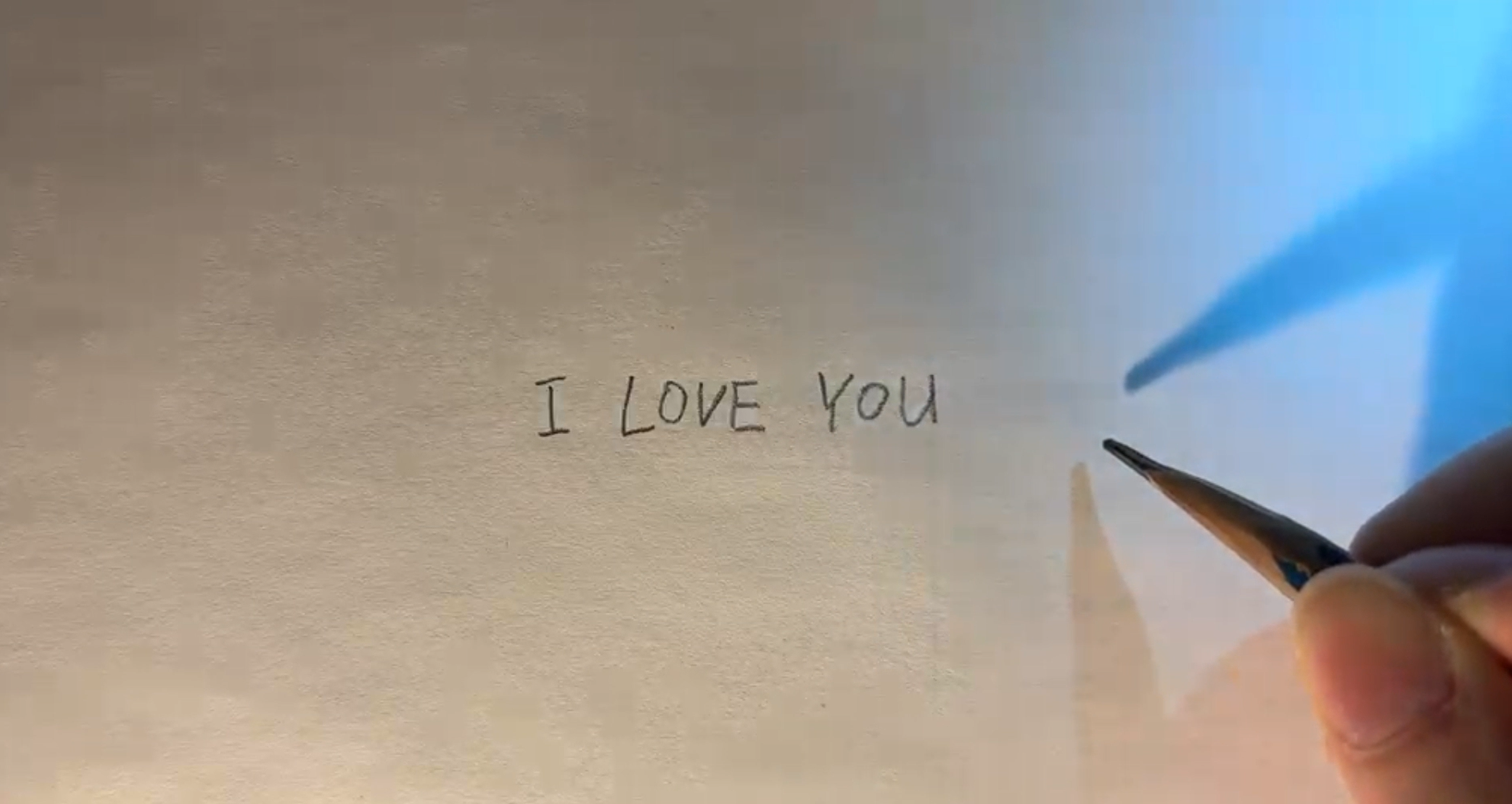
In Geek’s Love Letter, Shellya walks people step by step to learn how to say “I Love You” using ASCII.
In my first year, I’ve learned about binary code, and ascii. Binary code only consist of “0” and “1”. And each decimal number has a different binary code. Those binary code can be converted into decimal (as a 1-100,etc), octal (only using 0-7), and hexadecimal (using 0-9 and A-F) notation. Binary code, decimal notation, and hexadecimal notation also represent ascii code. Ascii code is a numerical representation of some characters, number, and alphabets in Computer Interface. So, it means when we type a letter in our computer, the computer will read it as a binary code or hexadecimal notation, and convert it into character and alphabet using the ascii code. 5
With step by step substitution, “I Love You” becomes “0100 1001 0010 0000 0100 1100 0110 1111 0111 0110 0110 0101 0010 0000 0101 1001 0110 1111 0111 0101”, including the spaces.
Drafts (Tie-ups, Threading, and Treadling)
Drafts didn’t come to exist until circa late1600, but weaving has always been an embodied practice from antiquity. Women would weave and explore the patterns, while writing down personal records of patterns in texts. The importance of draft lies in “connect[ing] the design process to the mechanism installed in the loom” and it “served as an instrument for pattern generation” 6(190). It’s not only a storage of the patterns. It’s like a visual coding tool of the 1600.
A weaving draft consists of three matrices: threading (top bar), the tie-up (upper left corner), and the treadling (right side column). The bottom right part of the image is called the drawdown, which indicates how the final weaving will look like.
The final pattern in the drawdown can be calculated using mathematical matrix. If we define
| Matrix | Dimensions | Weaving Role |
|---|---|---|
| A | 94 × 8 | Weft sequence — which of 8 shaft combinations each of 94 weft picks activates |
| B | 8 × 8 | Tie-up — how the 8 shafts connect to 8 treadles (the foot pedals) |
| C | 8 × 58 | Threading draft — how 58 warp threads are threaded through 8 shafts |
| P | 94 × 58 | Drawdown — the final cloth pattern, showing every thread intersection |
then
P = A · Bᵀ · C
Here, I created a p5.js sketch that calculates and shows P, when I mouseclick on A, B, and C.
transposeMatrix(gMatrixB)(Bᵀ) rotates the tie-up, so tie-up is read from the treadle’s perspective rather than the shaft’smultiplyMatrix(gMatrixA, Bᵀ)shows for each weft pick, which shafts are raisedmultiplyMatrix(intermediate, gMatrixC)checks for each weft pick (row) and each warp thread (column), if the warp thread is on a shaft that’s raised. If the dot product > 0, the weft goes under the warp (warp floats); if 0, the weft floats over.drawTable( gMatrixP, gColumnA, gColumnA, colorHorizontal, colorVertical, SCALAR )P uses color to distinguish warp-up vs weft-up intersections, where color horizontal is red, color vertical is yellow
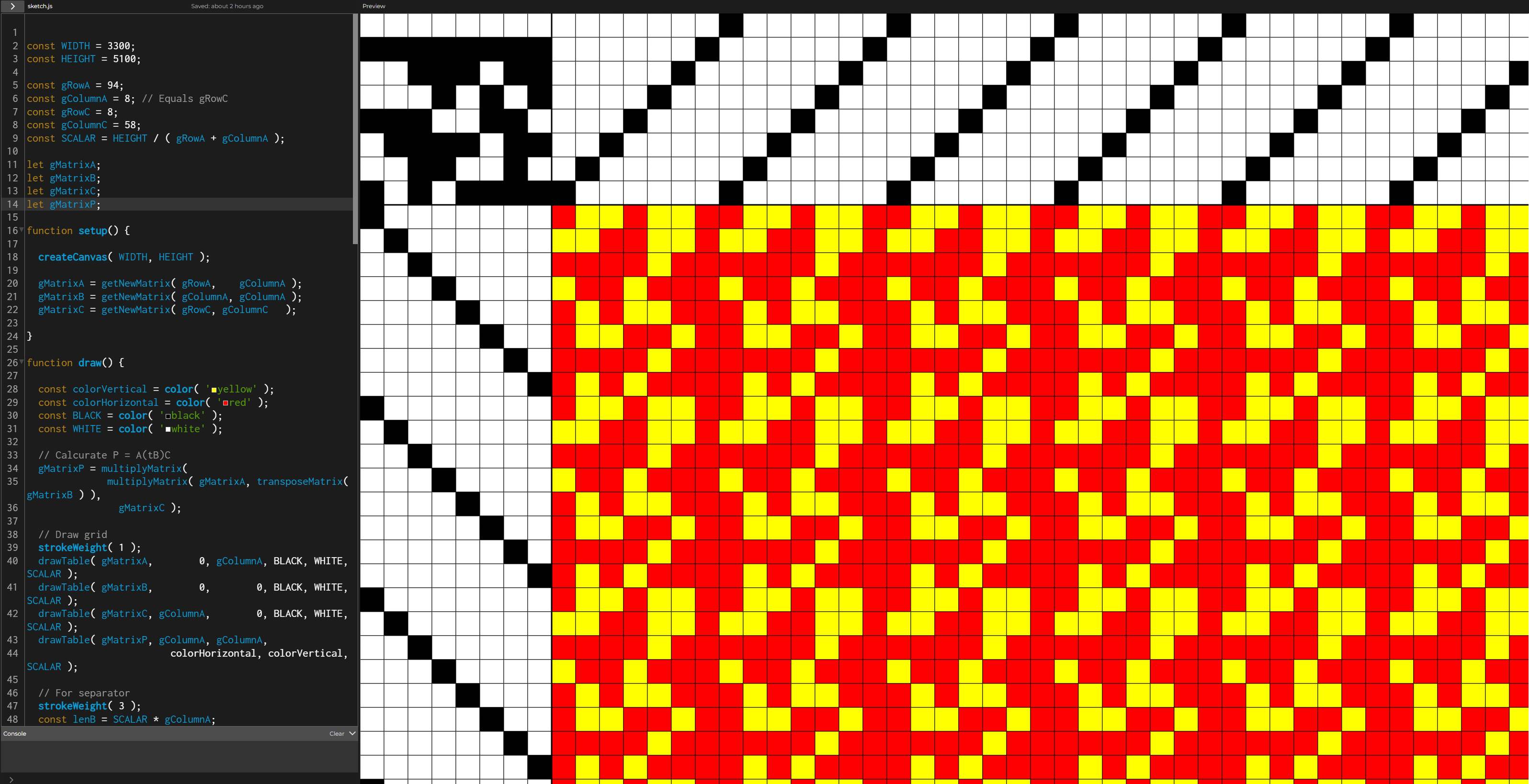
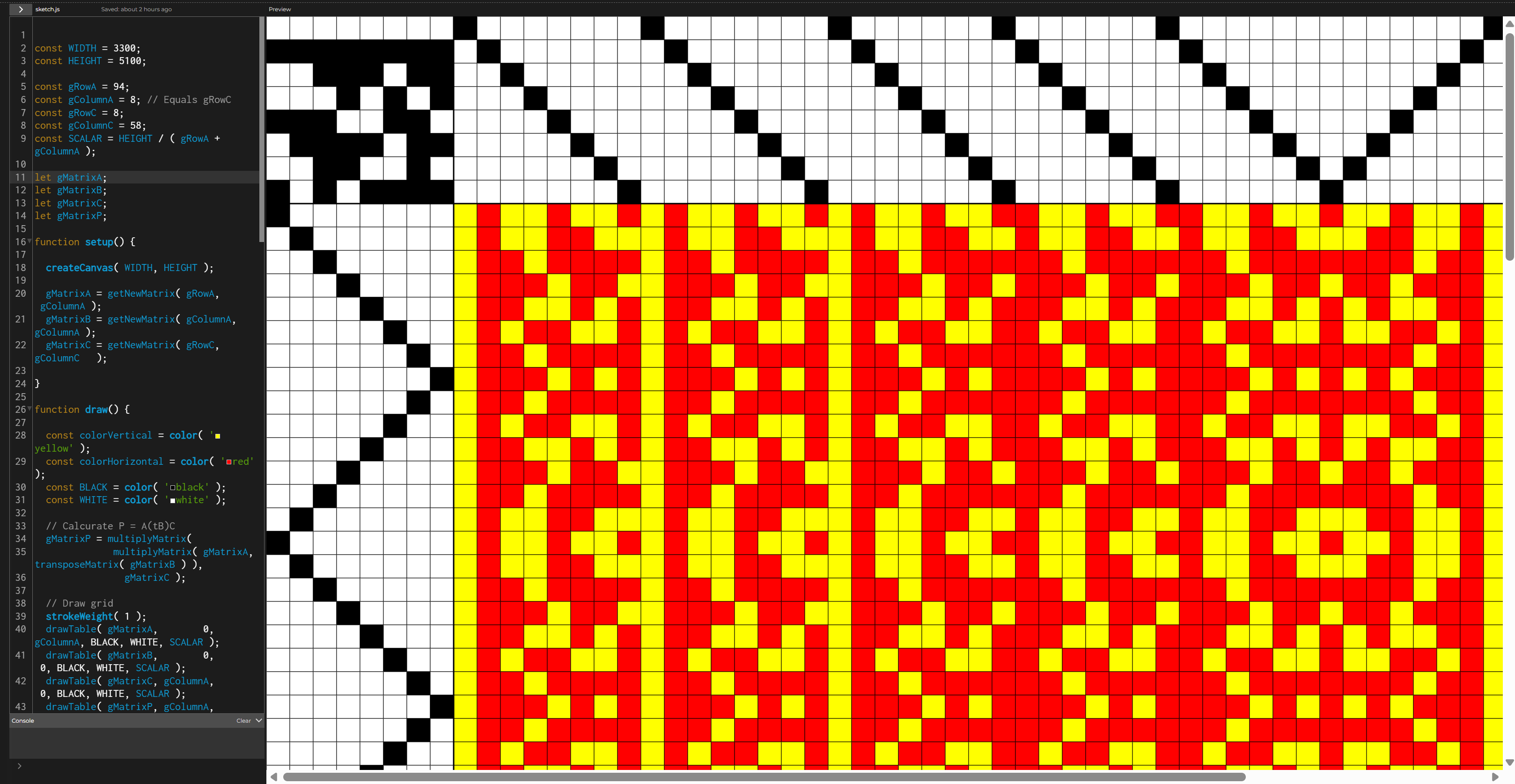
There is an interesting contrast between how draft is taught in a book for coding, vs a book for weavers. In the book of coding, the formula was deducted in the first place in order to be applied to the code7. While in a weaving textbook, the learning is more experiential, each square is manually filled in looking at the tie-ups, threading, and treadling. And weavers learn how to analyze fabric, to transfer the result into drafts. It involves a lot of plotting on a piece of paper8.
A Broken Communication Circuit
In my artifact, I designed a draft for 8 shaft 8 treadle loom. The unique point is using the ASCII representation of 8 letters, “ILOVEYOU” in the tie-ups. Threading followed a pattern of making repeated mirroring patterns using the pointed turn. As for treadling, I was mixing some common treadling sequences but more or less freely experimented with how the stepping might change the pattern. Noticeably, since all ASCIIs start with 0, there is always a repeated opening in between the main pattern columns to form vertical belt-like pattern.
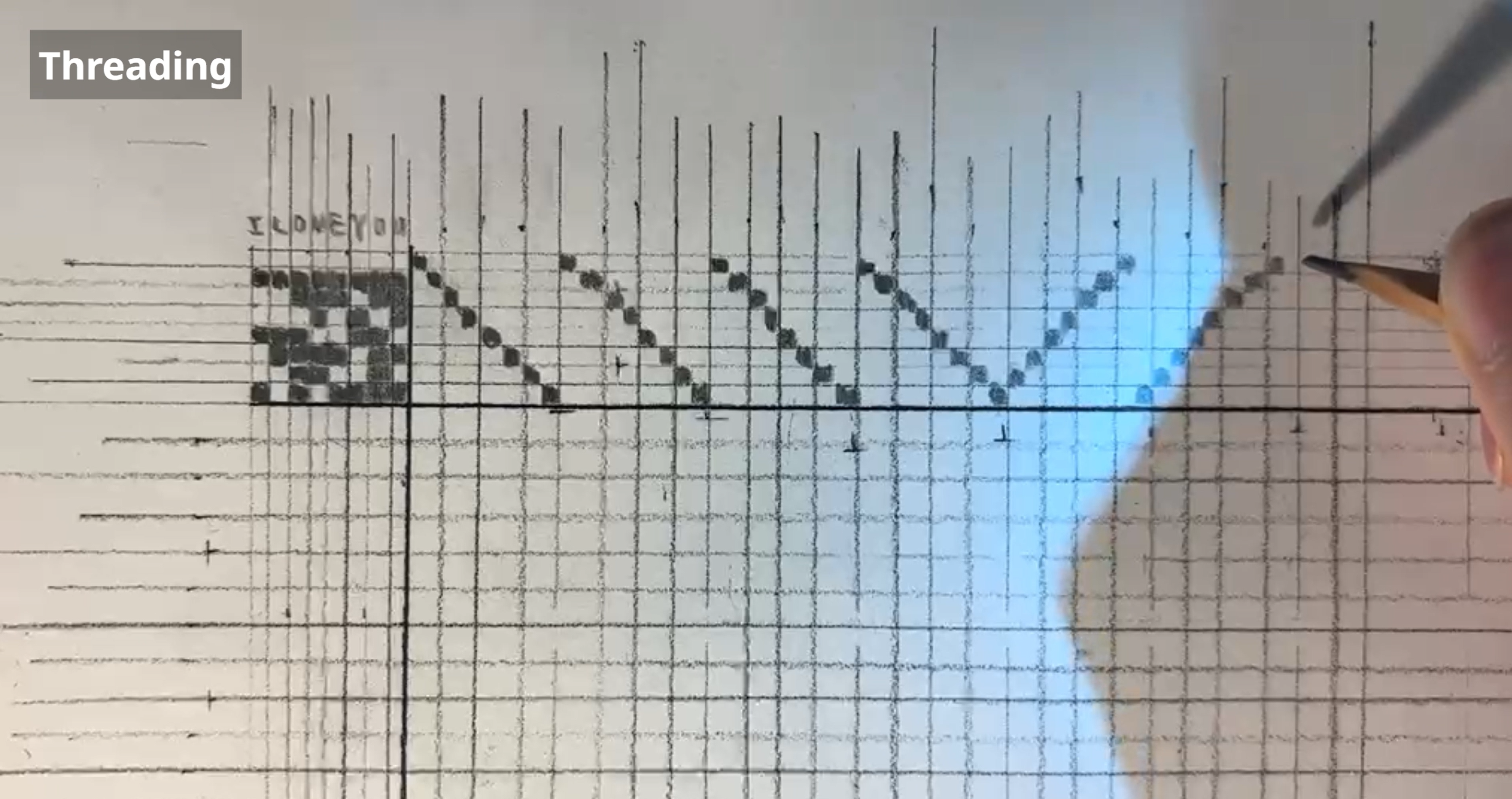
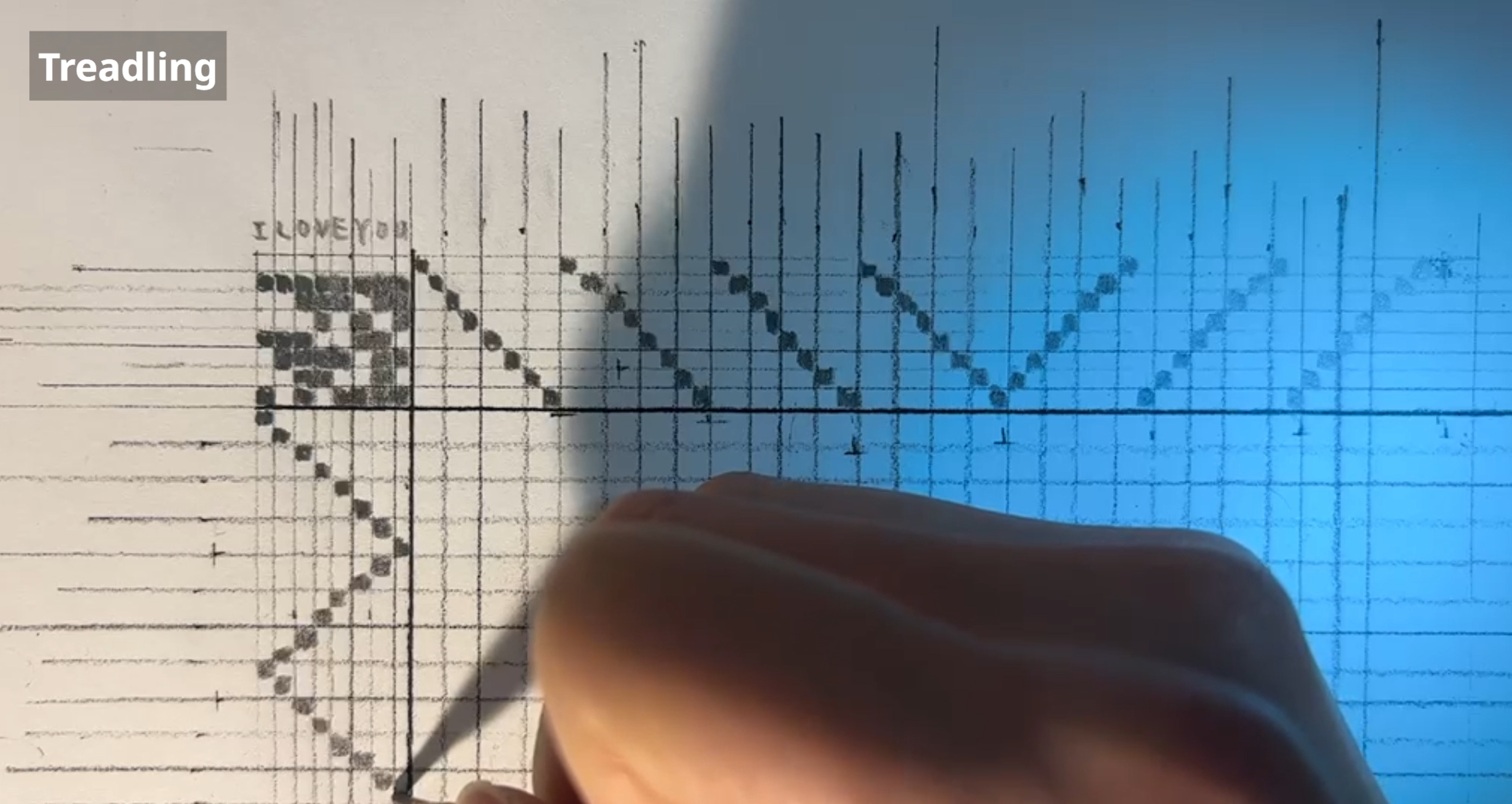
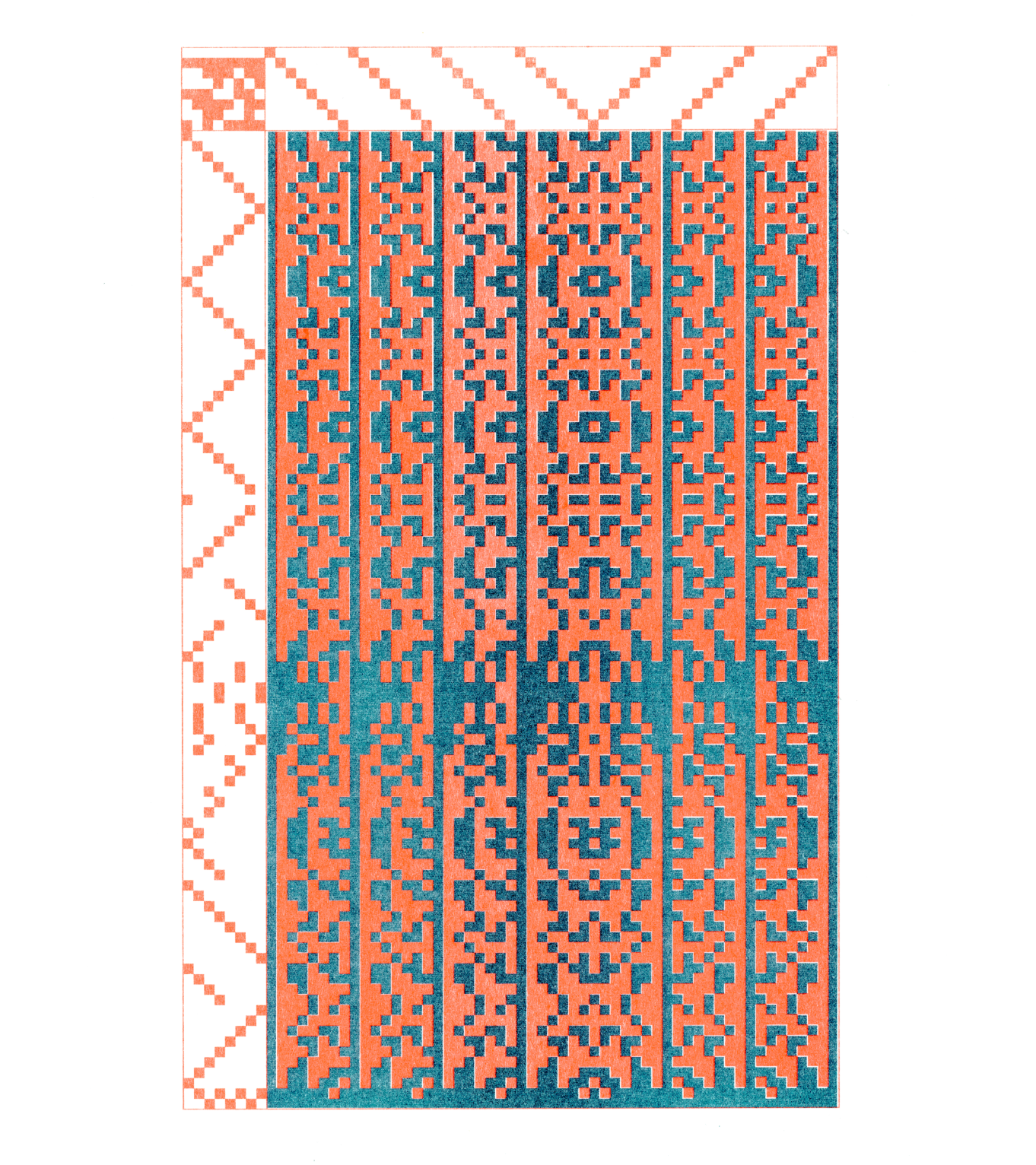
It was genuinely interesting to see how an ASCII code might be translated into a pattern. I was interested in examining how an ASCII code might be translated into a visual form, and further expanded through the matrix manipulations afforded by an 8-shaft loom, where the temporality of my own labor, treadling, enables the gradual emergence of the pattern. However, there is more value in analyzing the context surrounding this work, rather than the work itself.
Stuart Hall defines communication not as a simple transfer of meaning, but a structured, unequal process shaped by social conditions, where meaning is encoded under certain conditions that are different from the condition under which they might be decoded. In this sense, the artifact reveals a broken “communication circuit” in Hall’s term9, since weaving does not have a dominant code that can be decoded by a non-weaver audience. While in comparison, neither does computer science has a dominant code if its communication is brought down to the level of binary code (as in “geeks”’ love letter). The work ended up not being able to send any message across without extensive explanation. It floats in a broken communication circuit.
Darkside of the Information Theory
In the digital age, messages are compressed, encoded, and encrypted beyond immediate human perception. They are transformed into forms that often conceal their underlying structure, requiring computational processes to be interpreted again. In the past, people have to talk with a computer using its language, and talk to them at a deep level that required human interlocutors to understand the wiring, and then the binary code. In 2026, it is very rare to find someone who would read or write ASCII even among the deep core tech engineers.
While most of our messages are sent via binary, we do not see or be able to read that translated messages in the mid-way. I could hear people say, what is the matter? So be it. The information theory, the pixels, the computers, all afford us to compress out messages as much as possible, and receive the same thing at the other end. The problem are two folds, involving the argument of “pure experience”, and “black box”.
Pure Experience10
Digitized information can never be the same as the original information. Kotelnikov’s sampling theorem could only suggest they are “close enough” if, and only if, they are taken out of any context. If I recorded “I love you” and instead of saying it myself, keep playing that on a player to my partner, the meaning is completely destroyed. That is why women spent weeks and months to embed their message in a fabric, so that the meaning can be kept even when they cannot make that message be heard in person any more. There is a definitive philosophical divide in those that believe you’re merely receiving information in a simulated world, and those believe you experience the world—uniquely and bodily. The former would agree that AI can replace humans; while the latter would stand firm that human subjectivity, values, and the irreducibility of experience cannot be replaced by AI.
Black Boxed
When a message becomes obscured in its intermediate state, control over the communicative process is diminished for both the sender (encoder) and the receiver (decoder). This issue extends beyond concerns of security. If a message is understood as a composite of content, medium, and the structural context in which it is produced and received, then even when content can be approximately preserved, neither the medium nor the structural context can be assumed to be neutral.
The black-boxing of communication processes effectively redistributes agency away from participants and toward the infrastructures that mediate transmission—systems that are often centrally controlled. This shift becomes particularly consequential in contexts where messages are disseminated (often anonymously) to mass audiences, as the conditions of address and reception are already diffuse and asymmetrical. Within such systems, binary encoding also introduces opportunities for modulation, transformation, or deviation of the original message, whether intentional or incidental, thereby adding further layers of opacity.
Most significantly, the emergence of deep learning systems and large language models has intensified this condition of opacity to an unprecedented scale. In these systems, even developers and researchers are often unable to fully account for how information is processed, transformed, or generated. This epistemic limitation raises critical concerns regarding responsibility and ethics, as the inability to trace or explain transformations within the system can lead to unintended and potentially harmful consequences.
On the other hand, a woven medium is inherently open for observation. It is a common practice for weavers to send samples to each other, and a weaver can comprehend the fabric to a point where they can also create the same design.
Feedback
While my work foregrounds a disrupted or “broken” communication circuit, one of my cohort members remarked that “it makes me feel something of the decoration and, [it] can send the message of the ‘I love you.’” Although this response may be partly attributed to their higher visual literacy as artists, it nevertheless suggests the persistence of affective communication even within obscured or fragmented systems. This observation prompted me to reconsider the potential of slow, materially grounded forms of visual transmission—practices historically embedded in textile traditions, many of which have been cultivated and sustained by women.
Textile artist Suzuki Masaru, in an interview, reflects on the intimate and continuous relationship between humans and textiles and frames textile design as an act of embedding a multiplicity of messages within fabric.11 Such a perspective repositions textiles not merely as decorative or functional objects, but as communicative media that operate through duration, tactility, and lived experience.
There is also a study carried out by Lia Cook and Dr. Greg J. Siegle in 2010, indicating that more emotional stimulation was observed in the brain when a woven face is shown as compared to a photographic image of the same face12.
A related line of inquiry emerged in discussions concerning how trained weavers might interpret the work, particularly whether they could perceive or resonate with its encoded message. To explore this, I shared the piece with both a faculty member and a recent graduate specializing in weaving. Their responses revealed several key insights. First, they expressed genuine interest in the work as an object, engaging with it aesthetically(not materially since it was a print). Second, while the ASCII-based encoding required explanation and visualization, once understood, they were able to recognize and appreciate its resonance with binary logic inherent in weaving practices. Finally, one alumna interpreted the work primarily as a finished object, expressing a desire to purchase and keep it as a weaver, “it would be a perfect interior motif”. The quality of the printed textile contributed to this perception.
These responses underscore a recurring tension between different modes of communication and interpretation—what might be described as a divide between technical encoding systems and embodied, craft-based ways of knowing. At the same time, they suggest that meaning is not entirely lost in translation; rather, it can be reconstituted through material, aesthetic, and affective engagement, even when the underlying system remains partially opaque.
-
Barrett, Kristine Louise. 2023. “Inhabiting Numbers: Ecologies of Weaving and Embodied Mathematics”. MA thesis, University of California, Berkeley. https://digicoll.lib.berkeley.edu › record › files. [31-34] ↩
-
Junko Higashimura(東村純子), “Josei ga Okuru Nuno: Kodai no Hire to Okinawa Yaeyama Shotō no Tisāji(女性がおくる布―古代の領巾(ヒレ)と沖縄・八重山諸島の手巾(ティサージ)―),” Manyō Kodai-gaku Kenkyūjo Nenpō(万葉古代学研究所年報), no. 10 (March 2012) (Nara: Manyō Bunka Shinkō Zaidan, Manyō Kodai-gaku Kenkyūjo). [51-61]. ↩
-
Barrett, Kristine Louise. 2023. “Inhabiting Numbers: Ecologies of Weaving and Embodied Mathematics”. MA thesis, University of California, Berkeley. https://digicoll.lib.berkeley.edu › record › files. [31-34] ↩
-
Ellen Harlizius-Klück (2017) Weaving as Binary Art and the Algebra of Patterns, TEXTILE, 15:2, 176-197, DOI: 10.1080/14759756.2017.1298239 ↩
-
Shellya, “How to Say ‘I Love You’ Using ASCII (Geek’s Love Letter),” Shellya (blog), June 30, 2009, https://shellya.wordpress.com/2009/06/30/how-to-say-i-love-you-using-ascii-geeks-love-letter/. ↩
-
Ellen Harlizius-Klück (2017), 190. Weaving as Binary Art and the Algebra of Patterns, TEXTILE, 15:2, 176-197, DOI: 10.1080/14759756.2017.1298239 ↩
-
Tatsuki Hayama(巴山竜来), Sūgaku kara Tsukuru Jeneratibu Āto: Processing de Manabu Katachi no Dezain(数学から創るジェネラティブアート―Processingで学ぶかたちのデザイン) (Tokyo: Gijutsu Hyōronsha, 2019). ↩
-
Peggy Osterkamp, Weaving & Drafting Your Own Cloth (Bloomington, IN: Self-published by the author, 1995). ↩
-
Stuart Hall, “Encoding and Decoding in the Television Discourse,” paper presented at the Council of Europe Colloquy on “Training in the Critical Reading of Televisual Language,” Centre for Mass Communication Research, University of Leicester, September 1973 (Centre for Contemporary Cultural Studies, University of Birmingham). ↩
-
西田幾多郎 『善の研究』(1911年)ch.1 「純粋経験」 ↩
-
**NHK World-Japan. 2025. “Playful Everyday Fabric.” NHK World-Japan (video), December 5, 2025. Available December 5, 2025–December 4, 2026. https://www3.nhk.or.jp/nhkworld/en/shows/2101058/. ↩
-
Lia Cook, “An Investigation: Woven Faces and Neuroscience,” Textile Forum 4 (2010), accessed April 17, 2026, https://www.liacook.com/wp-content/uploads/2019/06/LC_Resume_2019-June.pdf. ↩